What to look for in a well-made preserved moss wall piece
Checking the quality of a preserved moss wall piece before you buy
Preserved moss wall art has become a popular choice for adding a natural, calming element to interior spaces. Unlike live plants, these pieces require no watering or sunlight, making them a practical option for many rooms. However, not all preserved moss art is created equal. The care that goes into preparing the materials and assembling the frame directly affects how the piece will look over time. Knowing what signs to look for helps you choose a piece that will stay beautiful for years.
When you are considering a framed moss art piece, the first thing to notice is the overall impression of the surface. A carefully made piece looks intentional and balanced, not like a random scattering of moss. The colors should feel cohesive, and the arrangement should have a natural rhythm. If the moss looks like it was simply dumped into a frame, that is a sign of rushed work. A thoughtful composition shows that the maker considered how light, texture, and color work together.
Surface texture and moss variety
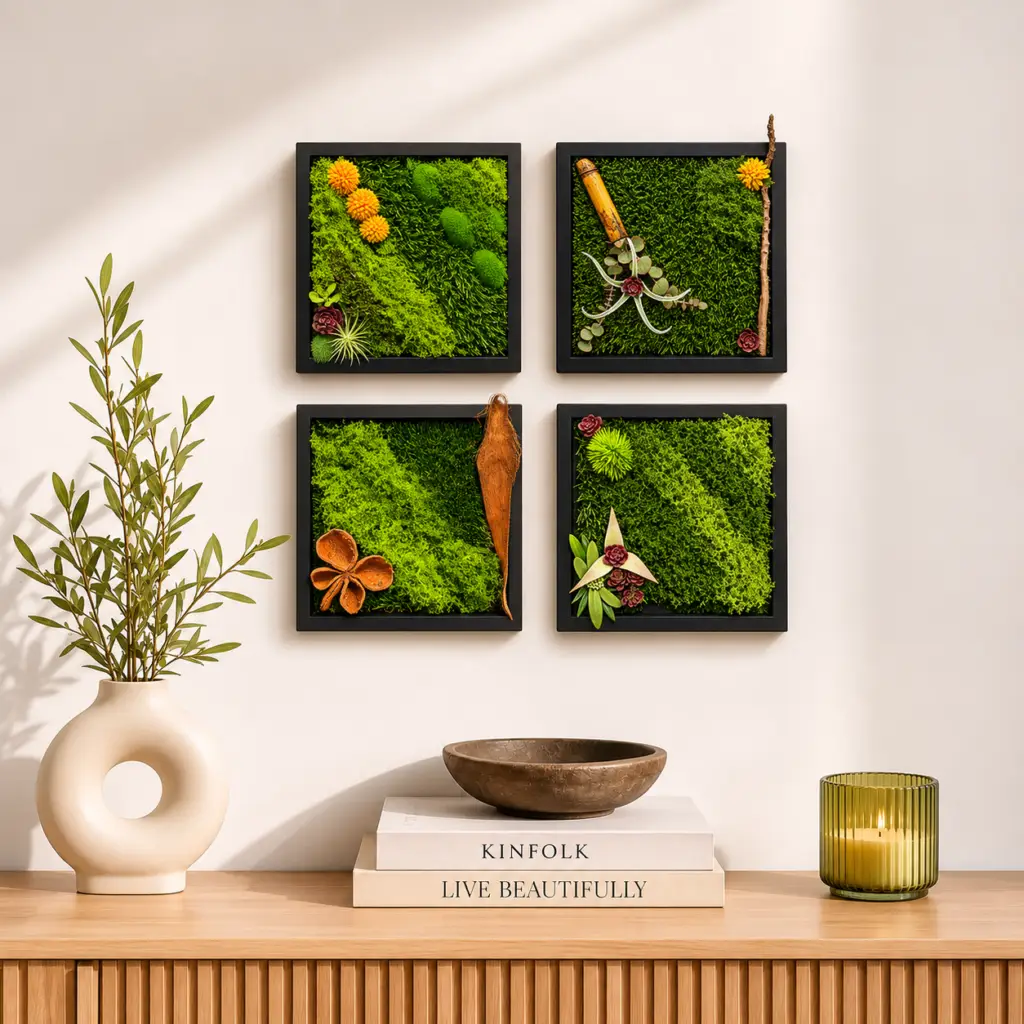
One of the clearest signs of quality is the variety of moss types used. A well-prepared piece typically includes several kinds of preserved moss, such as sheet moss, cushion moss, and reindeer moss. Each type has a different texture and visual weight. Sheet moss lies flat and creates a smooth background, while cushion moss adds volume and softness. Reindeer moss, with its branching, coral-like structure, brings a light, airy feel. When these are combined thoughtfully, the result is a rich, layered surface that draws the eye.
Look closely at how the different mosses are placed. In a carefully made piece, the transitions between types are smooth. There are no harsh lines or empty gaps where the backing shows through. The moss should cover the entire surface evenly, with no bare patches. If you see areas where the moss is thin or the adhesive is visible, that suggests the piece was assembled quickly without attention to detail.
Color variation and dye quality
Preserved moss often has its color enhanced or altered during the preservation process. This is normal and can produce beautiful results. The key is whether the color looks natural and even. In a high-quality piece, the shades of green, blue-green, or other colors should be consistent across each type of moss. Reindeer moss, for example, is often dyed in shades like lime green, teal, or even soft pink. The dye should be uniform, with no blotches or streaks.
If the moss looks like it has faded patches or uneven color, the piece may not have been prepared with care. Over time, poorly dyed moss can look even more uneven as it ages. A well-prepared piece uses moss that has been properly preserved and dyed, so the color stays vibrant for a long time. You can also check the edges of the frame to see if any loose dye or dust has collected there. That can be a sign that the moss was handled roughly during assembly.
The frame and backing
The frame itself matters more than you might think. A quality wood frame that is properly sealed protects the moss from dust and physical damage. Check the corners of the frame for gaps or uneven joins. In a carefully prepared piece, the frame fits together tightly, and the back is securely attached. If the frame feels flimsy or the backing board is loose, the moss inside may shift or sag over time.
Also look at how the moss meets the edges of the frame. In a well-made piece, the moss fills the space right up to the inner edge of the frame without leaving a visible gap. Some makers add a thin border of a contrasting moss or a strip of wood to create a clean transition. That kind of detail shows extra attention. If you can see the raw edge of the backing or the adhesive, the piece was likely assembled in a hurry.

Preservation and durability
Preserved moss has been treated with a glycerin-based solution that replaces the natural moisture in the plant cells. This keeps the moss soft and flexible without the need for water. A well-preserved piece should feel slightly pliable, not brittle or crumbly. If the moss feels stiff or starts to shed small pieces when you touch it gently, the preservation process may have been inadequate. That can lead to the moss breaking down and losing its color sooner than expected.
Another sign of good preservation is the absence of mold or musty smells. Properly preserved moss is treated to prevent microbial growth. If you notice any unpleasant odor coming from the piece, that is a red flag. It could mean the moss was not dried correctly before being sealed in the frame. A fresh, earthy smell is normal, but anything sour or chemical should make you reconsider.
When you bring a moss wall piece into your Home, you want it to stay looking its best with minimal effort. A carefully prepared piece will hold up well in typical indoor conditions. It should not require any special care beyond keeping it out of direct sunlight and away from high humidity areas like bathrooms. If the piece shows signs of careful preparation, such as even coverage, stable color, and a solid frame, it will likely remain a beautiful part of your decor for many years.
Assembly and finishing touches
The final details can tell you a lot about the maker's approach. In a well-prepared piece, the back of the frame is finished neatly, often with a dust cover and hanging hardware already attached. The hangers should be sturdy and aligned properly so the piece hangs straight. Some makers also add a small label or signature on the back, which is a mark of pride in their work.

Look at the glass or acrylic front if the piece has one. It should be clean and free of smudges or scratches. The seal between the glass and the frame should be tight enough to keep dust out. If the piece is open-front, the moss should be secured well enough that it won't fall out if the frame is bumped. A maker who takes time with these small details is likely to have put equal care into the moss arrangement itself.
Choosing a preserved moss wall piece is about more than just liking the look. By checking the texture, color, frame quality, and finishing details, you can tell whether the piece was made with care. That attention to preparation makes all the difference in how the piece will age and how much you enjoy it. A well-prepared moss wall art piece becomes a lasting part of your Home, bringing a quiet sense of nature indoors without the upkeep.